

Beyond the Message: Why PR Professionals Must Claim Their Place at the Decision-Making Table
- News and Events
- Hits: 28
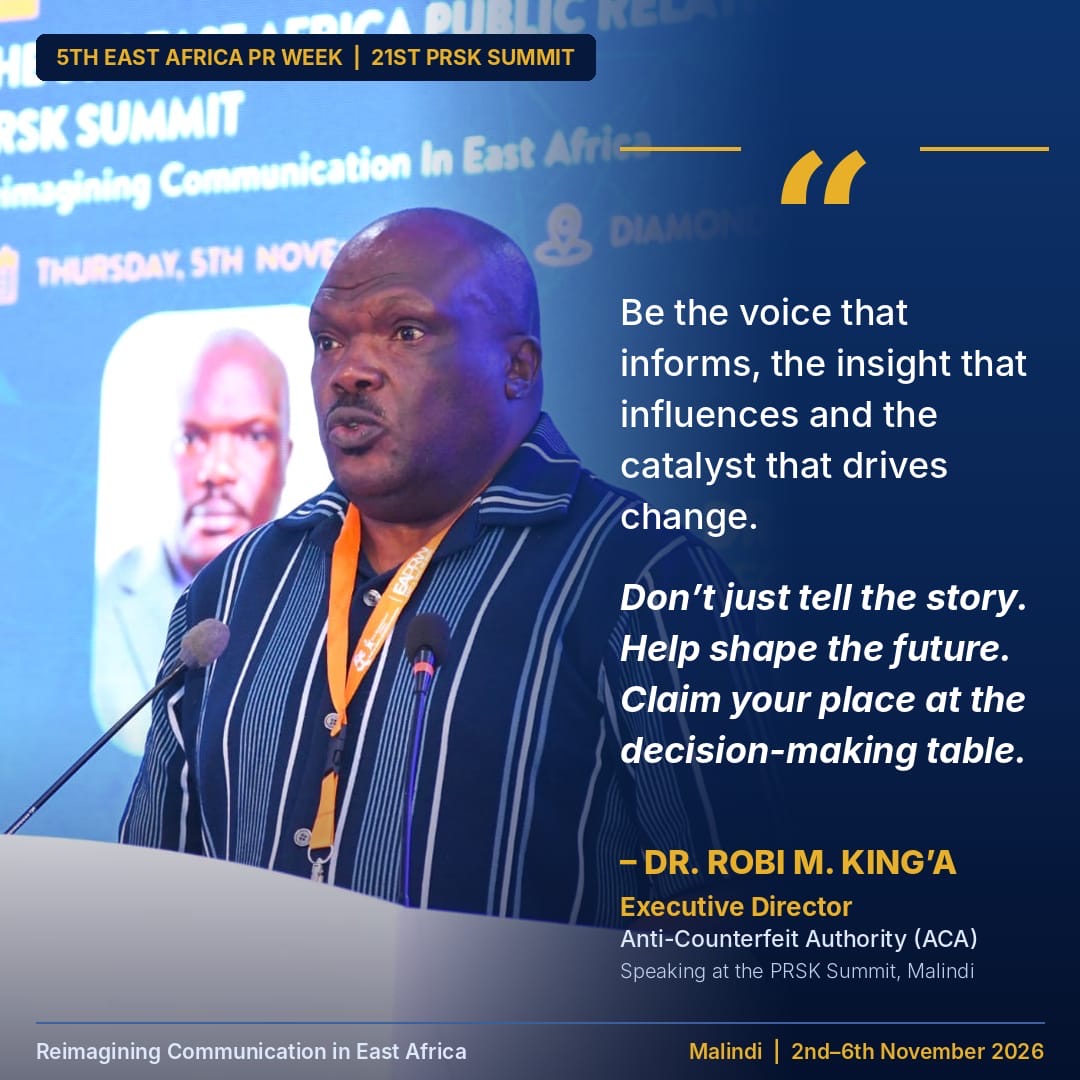
Public relations professionals must stop waiting to be invited into strategic conversations and take their place at the table where organisational decisions are made, Anti-Counterfeit Authority (ACA) Executive Director Dr. Robi M. King'a has said.
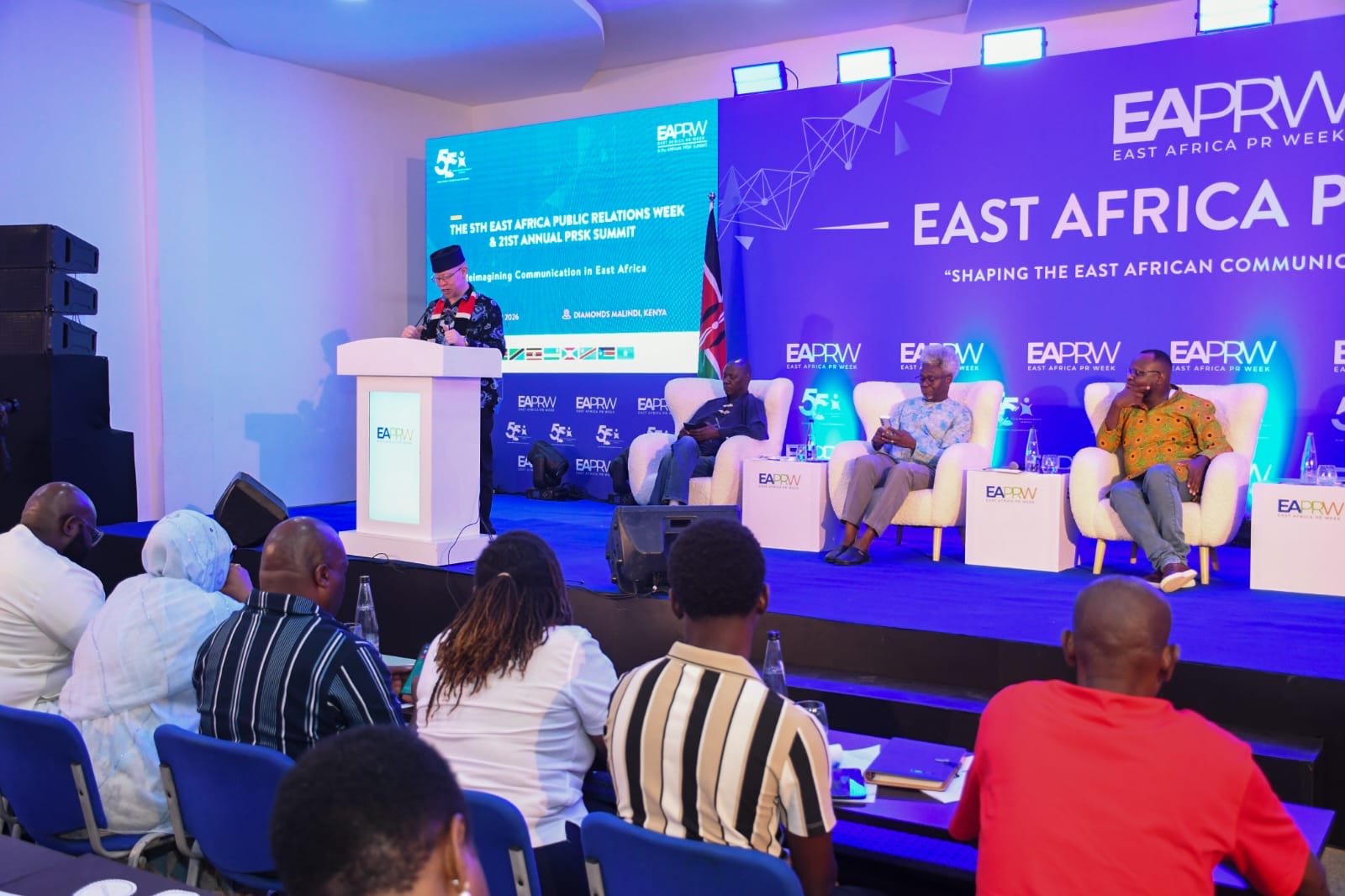
Speaking at the 5th East Africa Public Relations Week and the 21st Annual Public Relations Society of Kenya (PRSK) Summit in Malindi, under the theme "Reimagining Communication in East Africa: Shaping the East African Communication Narrative," Dr. Robi told communication professionals that mastering communication and storytelling is no longer enough. The profession, he said, must evolve from executing communication to providing strategic leadership.
Understanding the business
Dr. Robi urged practitioners to build a working knowledge of finance, law, technology, risk and organisational strategy. Influence in the boardroom, he noted, comes from understanding the business as well as the message.
He cautioned that communicators are too often brought in after major decisions have already been made, leaving them to explain choices they had no part in shaping. To change this, he challenged them to build their confidence, demonstrate their value and speak with clarity and conviction. The profession, he said, must move from simply managing perceptions to actively shaping organisational decisions.
The cost of staying on the sidelines is high. Where PR professionals are absent from the C-suite, he warned, decisions on organisational reputation, communication priorities, budgets and stakeholder relationships may be made without their input.
Lessons from the periodic table
In an unexpected turn, Dr. Robi drew on the periodic table to illustrate what effective leadership demands. The table, he said, is more than a collection of chemical elements. It offers lessons in leadership and strategic communication.
For PR professionals, he explained, each element represents a critical quality: resilience under pressure, the courage to speak up, collaboration across boundaries, the ability to drive change, unwavering integrity and the foresight to anticipate emerging challenges. These qualities, he said, are increasingly vital in a landscape shaped by evolving technologies, demanding stakeholders and growing reputational risks.
A profession at a turning point
Dr. Robi's message was a call for a more influential and strategically positioned profession. Practitioners, he said, should not limit their role to crafting messages and managing perceptions. They should understand the business, influence strategy, advise leadership and protect organisational reputation.
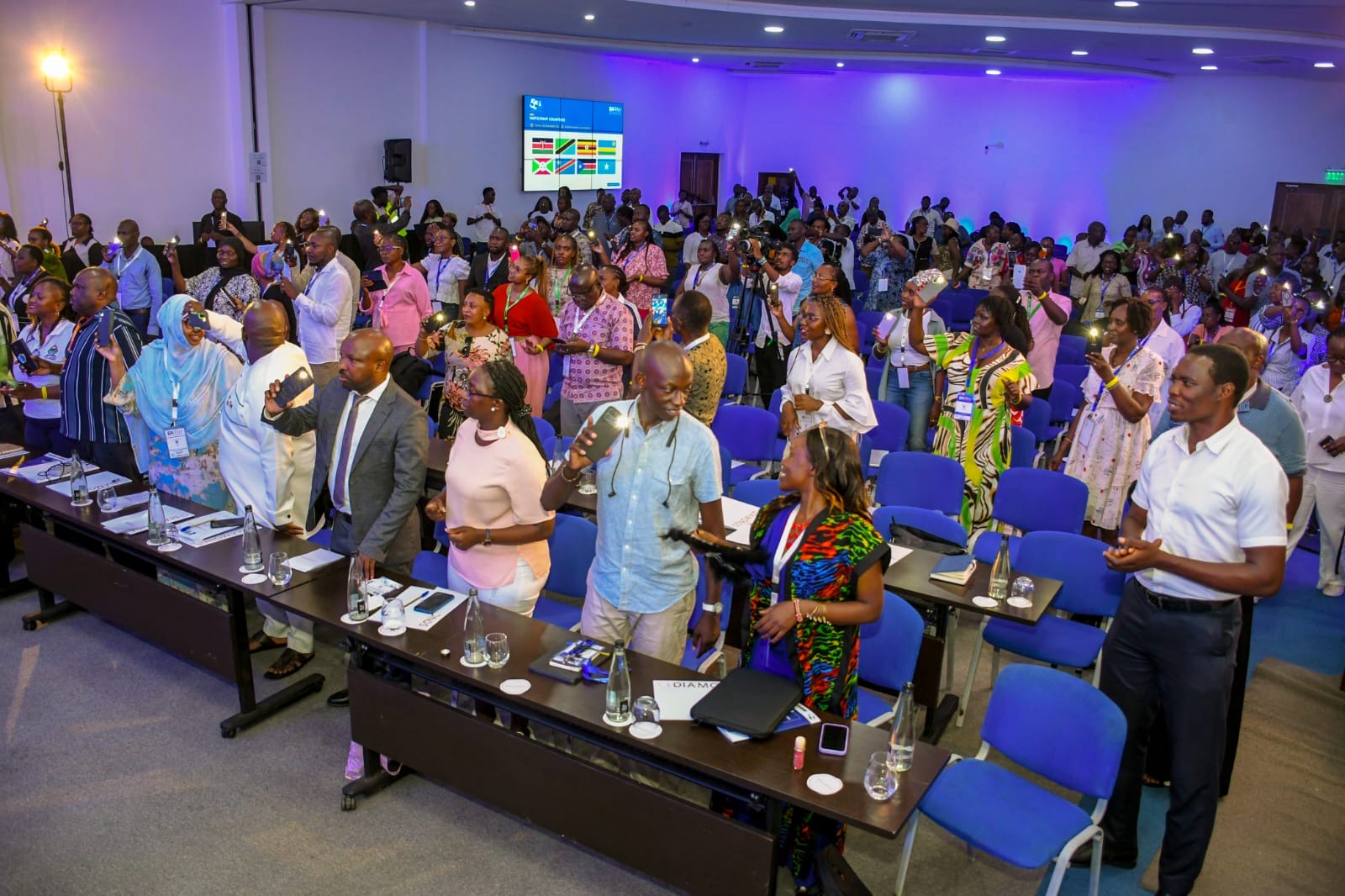
His call fits the summit's theme of reshaping the region's communication narrative. As delegates gathered in Malindi to reflect on the future of the industry, his message was clear: the future belongs to those who move beyond communication execution to strategic leadership.
"Be the voice that informs, the insight that influences and the catalyst that drives change," he urged delegates. "Don't just tell the story. Help shape the future. Claim your place at the decision-making table."